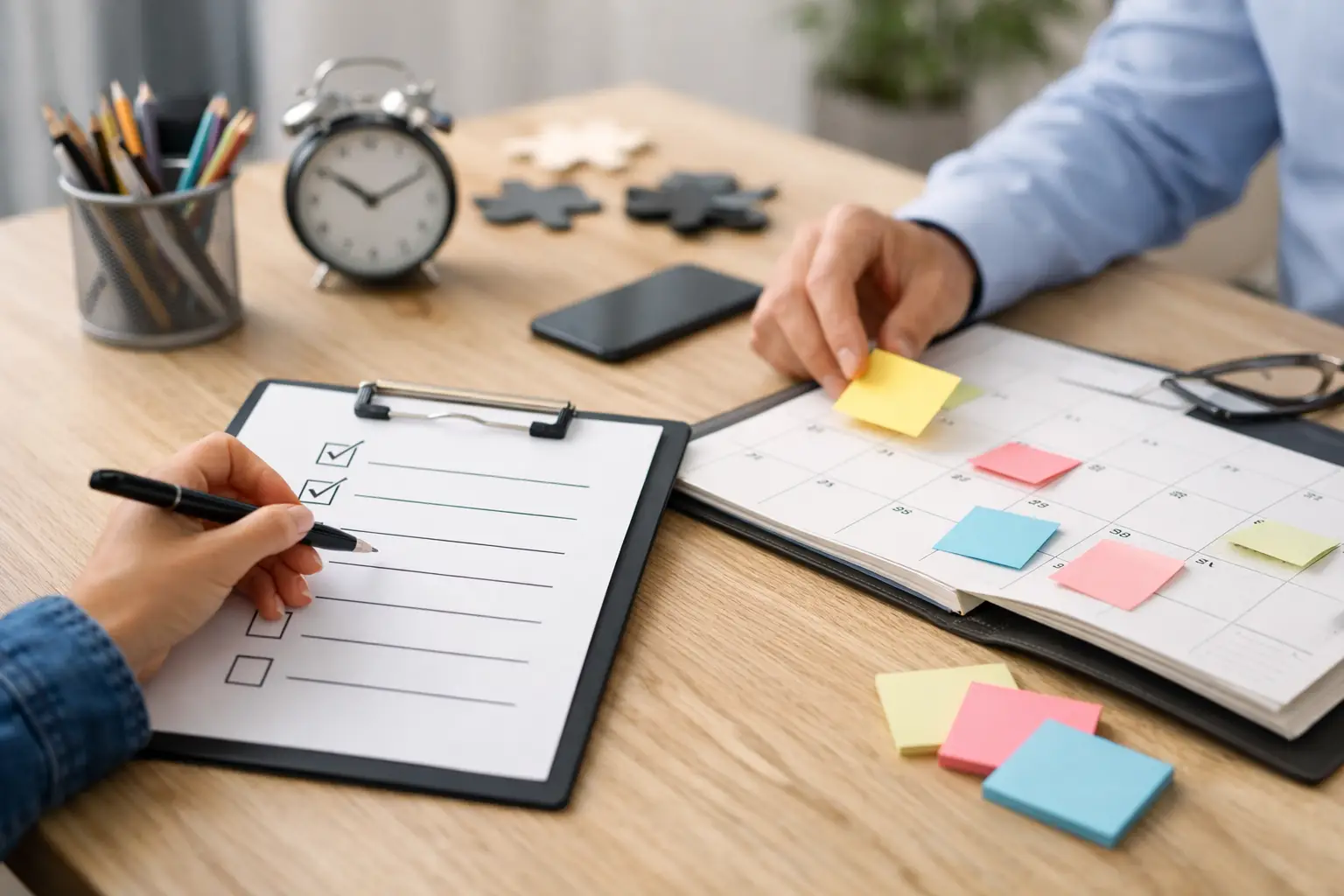

A blank planner can feel full of possibility on Sunday night, then become another source of guilt by Wednesday. If that sounds familiar, this review of ADHD planning systems is not about finding the one perfect app, diary or colour-coded method. It is about identifying the kind of support that makes everyday decisions easier when attention, energy and time awareness shift from day to day.
The best planning system is rarely the most detailed one. For many people with ADHD, it is the one that makes the next action visible, survives a disrupted week and does not require an hour of admin to maintain.
What this review of ADHD planning systems looks for
A useful system needs to reduce the amount you have to hold in your head. It should help you see commitments, choose what matters now and return to the plan after you have forgotten it for a few days. That last point matters. A system that only works in an ideal week is not a reliable system.
We also look for flexibility. Adults balancing work, university, family responsibilities and household tasks need a different level of detail from a teen managing school deadlines. Women who have spent years appearing organised while privately working twice as hard may need a system that reduces the mental load, rather than adding more rules to follow.
No planning tool can create motivation on demand or make every task interesting. It can, however, lower friction. It can turn “sort out my finances” into a visible first step, such as “find the last electricity bill”, and provide a realistic place to put it.
Paper planners: calm, concrete and easy to ignore
Paper planners suit people who think more clearly when they write by hand. Seeing a week spread across two pages can make appointments, school events and deadlines feel more tangible than they do on a screen. They are also free from alerts, open browser tabs and the temptation to check one more message.
The downside is that a paper planner cannot remind you to open it. If it lives in the bottom of a bag or under a pile of mail, it stops being a planning system and becomes a record of good intentions. It can also be frustrating when plans change often, particularly if rewriting appointments makes the page look crowded.
A simpler format is usually more sustainable: one weekly view for fixed commitments, plus a small daily area for a few priority actions. Avoid buying a highly structured planner simply because it looks motivating online. If tracking water, exercise, meals, mood, habits and goals creates pressure, leave those pages blank without judgement.
Digital calendars: strongest for time awareness
A digital calendar is often the most helpful foundation for people who lose track of time or underestimate how long a day already is. It keeps appointments in one place, can send reminders and is easy to adjust when life changes. Shared calendars can also reduce the back-and-forth for families, partners or households.
Its real strength is time blocking. Rather than keeping a long, alarming task list, you give selected tasks a possible home in the week. This might mean booking 30 minutes for an assignment outline, an hour for groceries, or 15 minutes to make a difficult phone call.
The trade-off is that calendars can become overly optimistic. Filling every open slot leaves no room for transition time, low-energy days, travel, meals or the tasks that take longer than expected. A more ADHD-friendly calendar includes breathing space and uses reminders sparingly. Ten alerts for one appointment can train you to dismiss all alerts.
Task apps: useful when the list stays small
Task-management apps work well for capturing ideas before they disappear. They can hold recurring tasks, break projects into steps and keep work, home and study lists separate. For a busy professional or student, that central capture point can be genuinely relieving.
But more features do not automatically mean more follow-through. Tags, filters, priorities and automation can be helpful only after the basic habit of checking the app is established. If you regularly open an app to find 127 overdue tasks, the problem is not a lack of effort. The system is asking you to process too much at once.
A practical approach is to keep a master list for everything, then choose no more than three meaningful tasks for today. The master list is storage. Today’s list is a decision. Those are different jobs, and combining them often creates overwhelm.
Visual boards: helpful for seeing progress
A visual board, whether on a wall or a screen, moves tasks through simple stages such as “next”, “doing” and “done”. This can be particularly effective for people who need to see work moving forward, rather than relying on a list that appears to grow forever.
Visual boards are useful for multi-step projects: organising a move, completing school work, planning a family event or managing a work project. They also make it easier to spot when too many tasks are sitting in the “doing” column. That is a cue to pause before starting something new.
Their limitation is that they do not show time. A board can tell you what is waiting, but not whether Thursday is already packed. Many people get the best result by pairing a visual board with a calendar, rather than expecting either tool to do every job.
The hybrid system is often the most realistic
For most people, one tool is not enough. A workable hybrid system might use a calendar for appointments and time-specific commitments, a task list for reminders and next actions, and a visible note or paper page for today’s priorities.
The key is to give each tool one clear purpose. If appointments are sometimes in a paper diary, sometimes in a mobile calendar and sometimes in a text message, the brain has to hunt for information before it can plan. That extra search is tiring, especially during a busy or emotionally demanding week.
Keep the set-up modest. A calendar, one capture list and one daily view are enough for many people. Adding systems should solve a clear problem, not create a new hobby called organising.
Match the system to the problem you are trying to solve
If missed appointments are the main issue, begin with a single digital calendar and reminders set at useful intervals. If tasks disappear once they are out of sight, use a paper weekly planner on your desk or a visible daily note. If starting is difficult, focus less on scheduling the entire project and more on defining the smallest physical next step.
For time blindness, use a calendar that shows the shape of your day and add realistic buffers. For overwhelm, reduce your daily list until it reflects what can actually be done. For inconsistent follow-through, make the plan easier to encounter: place the planner beside the kettle, set the calendar as a mobile home-screen widget, or check the next day’s commitments while packing up after dinner.
Parents supporting teens can help by keeping the planning conversation practical and collaborative. Instead of asking, “Why have you not started?”, try, “What is the first part that feels unclear?” A plan is more likely to be used when the young person has a say in how it looks and where it lives.
Trial a system without turning it into another test
Choose one system to trial for two weeks. Start with real commitments already in your life, then add only the next actions that matter most. A brief daily check-in and a weekly reset are usually more valuable than a perfect set-up.
At the end of the trial, ask specific questions. Did I see the plan when I needed it? Did it help me begin tasks? Was it easy to update when plans changed? Did it create clarity or pressure? Keep what worked, remove what did not and make one adjustment at a time.
For some people, the missing piece is not another tool but personalised structure and accountability. ADHD coaching can help translate broad intentions into routines that fit your work, study, family life and energy patterns. At ADHD Coaching Australia, this kind of practical support is built around real-life progress, without expecting you to become a different person to use a planner.
Your planning system does not need to look impressive. It needs to make tomorrow a little easier to begin, and give you a respectful way back when the week has gone off track.