
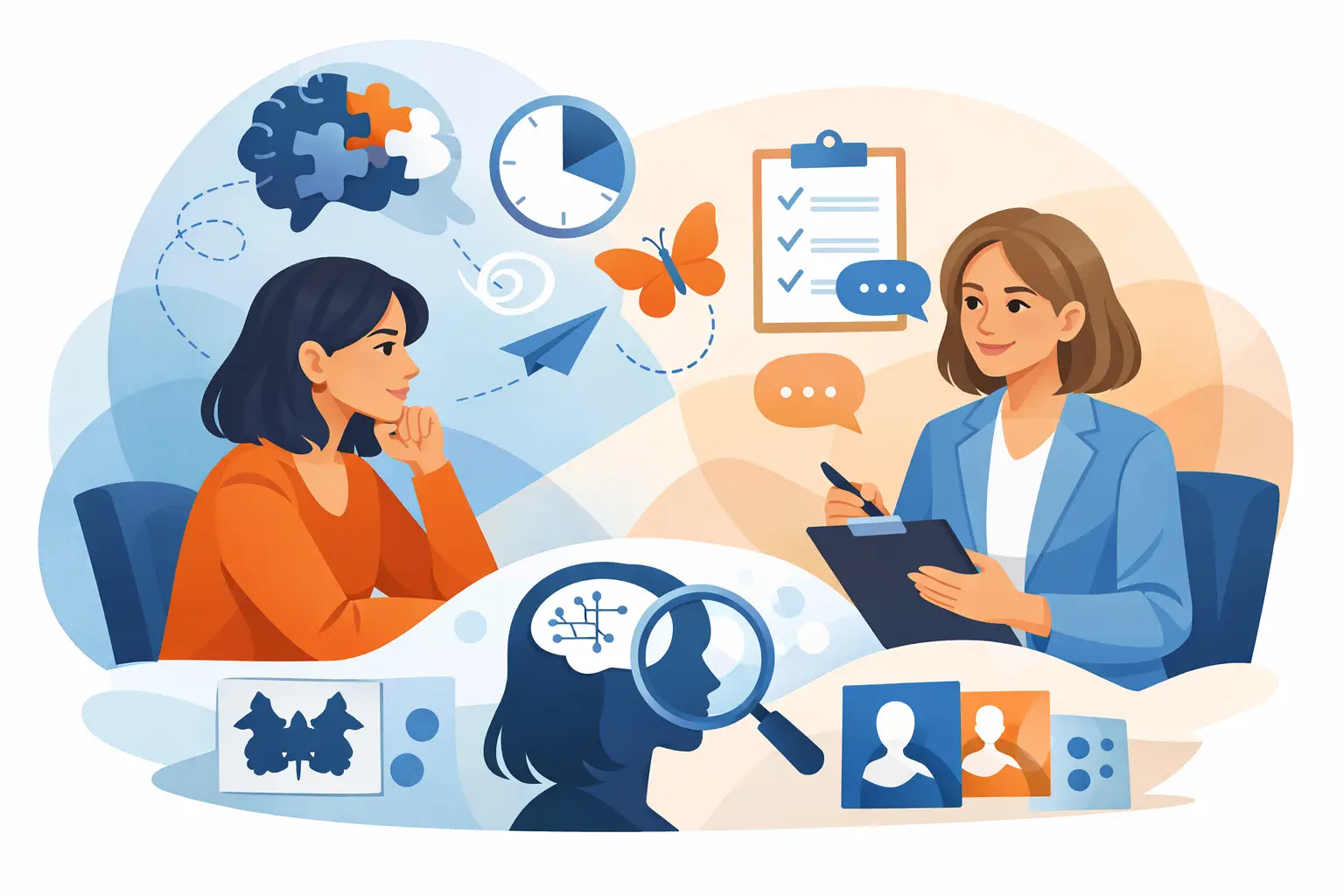
If you have spent years being told you are too emotional, forgetful, scattered or inconsistent, an adhd assessment for women can feel less like a label and more like an explanation that finally fits. For many women, the turning point comes after burnout, parenting stress, workplace pressure, relationship strain, or the realisation that anxiety treatment alone has never explained the full picture.
Women are often missed in early ADHD identification. Not because the signs are not there, but because they do not always look the way people expect. Many girls learn to mask early. They may appear capable, polite, high-achieving or quietly overwhelmed rather than obviously hyperactive. By adulthood, that masking can become so normal that even the woman herself may not realise how much effort daily life is taking.
That is why a thoughtful, informed assessment matters. It is not about proving you are struggling enough. It is about understanding your patterns properly, with context, compassion and structure.
Why ADHD can look different in women
ADHD in women is often internalised. Instead of being seen as disruptive, many women describe relentless mental noise, chronic procrastination, emotional swings, losing track of tasks, starting strong and then dropping off, or feeling exhausted from trying to hold everything together. Some have a long history of perfectionism. Others look organised on the outside but are barely coping behind the scenes.
Hormonal changes can also affect how symptoms show up. Puberty, pregnancy, post-partum changes and perimenopause can all make attention, emotional regulation and executive functioning feel harder to manage. This can muddy the picture. A woman may be treated for stress, depression or anxiety for years without anyone asking whether ADHD is sitting underneath it all.
That does not mean every overwhelmed woman has ADHD. It does mean the assessment process should take lived experience seriously, rather than relying on outdated assumptions about how ADHD is meant to present.
What an adhd assessment for women usually involves
A good adhd assessment for women is not based on one quick checklist. It usually involves a broader picture of your history, current challenges and symptom patterns across different parts of life.
In most cases, the process includes a detailed clinical interview, screening tools or rating scales, discussion of childhood signs, and questions about work, study, relationships, routines, mental health and daily functioning. You may be asked about school reports, family observations or earlier patterns that point to longstanding attention and executive functioning differences.
This can feel exposing, especially if you are used to minimising your own struggles. Many women say, “I thought I was just bad at adult life,” or “I can do hard things, so maybe I am making this up.” That self-doubt is common. It is also one reason an assessment needs to be done carefully. The goal is not to catch you out. The goal is to understand whether ADHD is the most accurate explanation.
Some clinicians will also look at overlapping or co-occurring issues such as anxiety, depression, trauma, sleep problems or learning differences. That matters because symptoms can overlap, and support works best when the full picture is understood.
What to expect before the appointment
Before an assessment, it helps to gather a few pieces of information. You do not need to arrive with a perfectly organised life history, but having examples can make it easier to explain what has been happening.
Think about recurring patterns rather than isolated bad weeks. You might notice a long history of lateness, unfinished projects, mental clutter, emotional reactivity, difficulty starting routine tasks, misplacing essentials, or needing intense pressure to get things done. It can also help to reflect on where you have been masking. For example, maybe people see you as capable because you overprepare, stay up late to catch up, or rely on constant reminders just to get through the day.
If you have old school reports, they may be useful, especially if they mention distractibility, inconsistency, talking too much, daydreaming, poor follow-through or not working to potential. If you do not have them, that does not automatically stop the process. Plenty of adults are assessed without perfect records.
Why women are often diagnosed later
Late diagnosis is common for women with ADHD. Sometimes it happens after a child is diagnosed and the mother recognises herself in the descriptions. Sometimes it happens during university, after a promotion, or in the middle of family life when coping systems stop working.
There are a few reasons this delay happens. One is masking. Another is that women are more likely to be labelled with personality flaws instead of neurodevelopmental differences. They may be called messy, dramatic, lazy, sensitive or unreliable when the underlying issue is executive function. Some become high performers by running on stress and perfectionism, which can hide ADHD for years while quietly increasing burnout.
Late diagnosis can bring relief, grief, anger or all three. Relief because things finally make sense. Grief for the years spent blaming yourself. Anger because support might have changed a lot. All of those responses are valid.
The value of assessment support
The assessment process can be emotionally loaded. It asks you to revisit old struggles, explain things you may never have had words for, and sort through questions that feel deeply personal. That is where practical support can make a real difference.
Assessment support is not the same as diagnosis. It does not replace a qualified clinician. What it can do is help you prepare, organise your history, clarify your concerns and feel less overwhelmed by the process. For women who have spent years second-guessing themselves, having structured guidance can reduce a lot of unnecessary stress.
This is especially helpful if you are juggling work, parenting, study or burnout while trying to book appointments, complete forms and remember relevant examples. Support can turn a confusing process into one that feels manageable.
At ADHD Coaching Australia, this kind of practical, shame-free preparation is part of helping clients move from confusion to clarity without adding more pressure.
What happens after an ADHD assessment for women
The next step depends on the outcome. If you receive a diagnosis, that can open the door to treatment planning, coaching, workplace or study supports, and a stronger understanding of how your brain works. If ADHD is not confirmed, the process can still be useful because it may point towards other explanations or support needs.
Diagnosis itself is not a magic fix. It is a starting point. Many women feel an initial rush of validation, followed by the question, “Now what?” That is where ongoing support matters.
For some, medication is part of the picture. For others, coaching, therapy, environmental changes and practical systems are just as important. Usually, it is not one thing. It is a combination of better self-understanding and realistic supports that actually fit your life.
Practical signs it may be time to seek assessment
You do not need to be in crisis to explore assessment. It may be worth considering if you have a pattern of overwhelm that does not match your effort, if simple tasks feel strangely hard to start, or if you are constantly using stress to force yourself through everyday responsibilities.
It can also be worth exploring if you have repeated cycles of burnout, if you have always felt “too much” and “not enough” at the same time, or if anxiety treatment has helped only part of the problem. Another strong sign is recognising lifelong patterns that affect multiple settings, not just one rough season.
The key is not whether you have coped. Many women have coped brilliantly. The real question is how much it has cost you to keep coping.
A more accurate story can change everything
For many women, assessment is not about chasing a trend or finding an excuse. It is about replacing years of self-criticism with a more accurate story. When the story changes, support can change too. You can stop forcing yourself through systems that were never built for the way your brain works and start building ones that are.
If ADHD has been quietly shaping your life in the background, getting clear about it can be one of the most practical and compassionate things you do for yourself. You do not need to have every answer before you begin. You just need enough honesty to say, “Something here deserves a closer look.”