
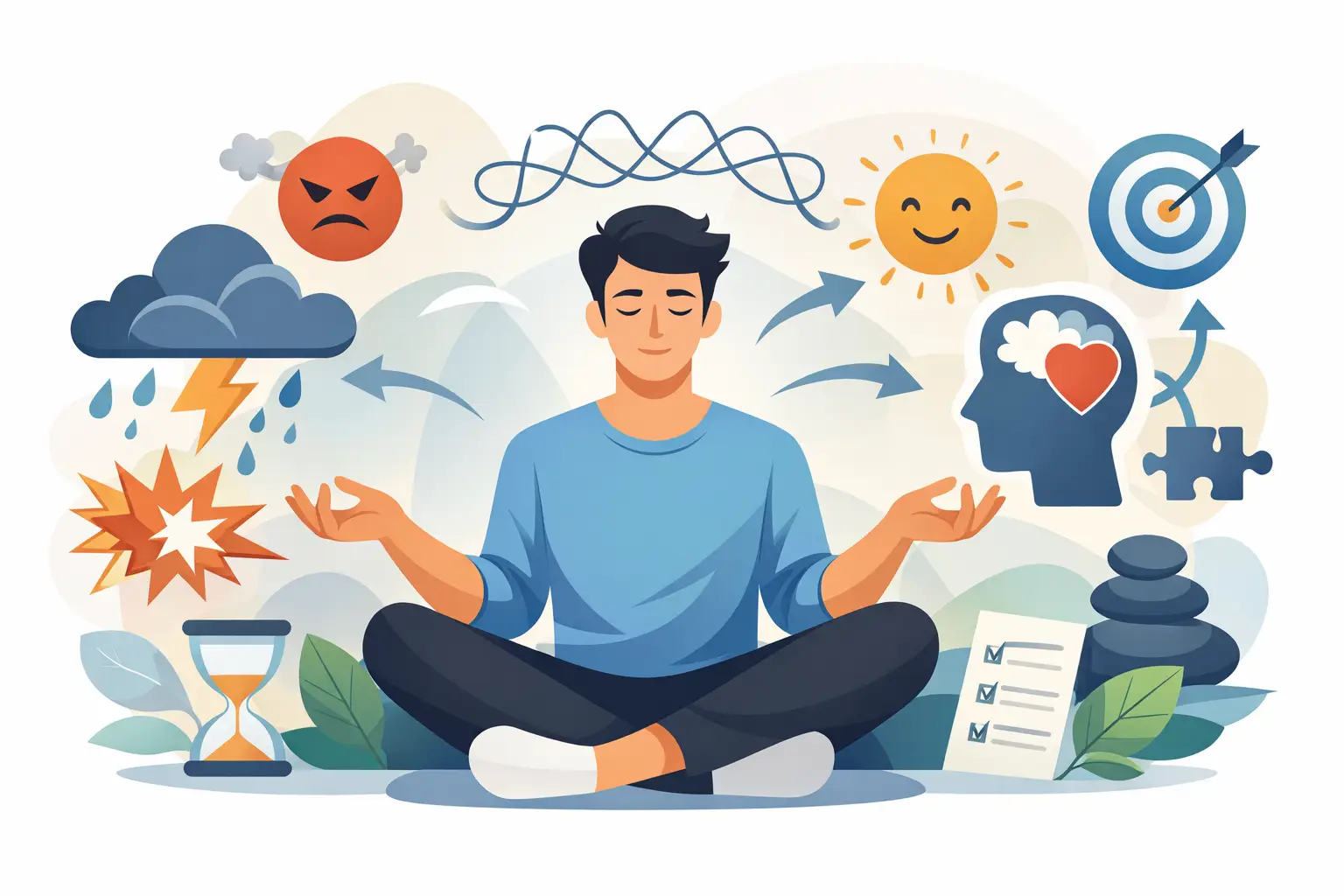
One minute you are coping, the next a small comment, a change of plans, or a forgotten task hits like a wave. That pattern is common with ADHD, and it is one reason ADHD emotional regulation strategies matter so much in daily life. This is not about being dramatic, lazy, or too sensitive. It is about a nervous system that can react quickly, feel intensely, and take longer to settle.
For many adults and teens, emotional dysregulation is the part of ADHD that causes the most stress at home, at school, and at work. It can show up as snapping in frustration, crying unexpectedly, shutting down after criticism, or feeling flooded by shame after a mistake. For women, this can be especially confusing because years of masking often hide the ADHD while the emotional load keeps building underneath.
Why emotional regulation feels harder with ADHD
ADHD affects more than focus. It also affects impulse control, working memory, and the ability to pause between feeling something and reacting to it. That pause is where regulation lives. When the pause is short, emotions can come out fast and strongly.
There is also the exhaustion factor. If you are already using a lot of energy to stay organised, meet deadlines, remember details, and appear on top of things, there is less capacity left when something goes wrong. What looks like an overreaction is often the final straw after a full day of self-management.
This is why shame usually makes things worse. If you tell yourself to just calm down, be more mature, or stop overthinking, you add pressure without adding support. Better results tend to come from practical systems that reduce intensity early and help you recover faster.
ADHD emotional regulation strategies that work in real life
The most effective approach is not to rely on willpower in the heat of the moment. It is to build supports before, during, and after emotional spikes. That gives you more options when your brain is under pressure.
Start by spotting your early warning signs
Many people only notice they are dysregulated once they are already at a ten out of ten. It helps to learn your earlier signals. That might be talking faster, clenching your jaw, feeling hot, pacing, going silent, or suddenly believing everything is hopeless.
Once you can name the signs, you can act sooner. A simple phrase like, I am getting flooded, or, This is a red-zone moment, can create just enough distance to interrupt the spiral. The goal is not perfect calm. The goal is earlier awareness.
Reduce the load before you need to regulate
Emotional regulation improves when daily life is less chaotic. That sounds obvious, but it matters. If you are constantly running late, skipping meals, sleeping poorly, and trying to hold five unfinished tasks in your head, your margin for frustration shrinks.
Practical supports can make a real difference here. Use visible reminders instead of memory. Build transition time between appointments. Keep recurring tasks in one system, not three. Make food and water easy to access. If mornings are rough, prepare the night before. These are not small lifestyle tips. For ADHD, they are regulation tools because they lower the number of stress points your brain has to absorb.
Use a pause plan, not just a promise
In the middle of an emotional surge, telling yourself to be rational rarely works. A pause plan works better because it gives you a script to follow when thinking clearly is harder.
A good pause plan is short and specific. It might be stepping outside for two minutes, drinking cold water, doing ten slow breaths, texting a trusted person, or saying, I want to respond properly, so I need a moment. Some people need movement to discharge energy. Others need reduced stimulation, like quiet, low light, or a break from conversation.
The best plan depends on your triggers. If conflict sets you off, your pause plan should protect space before you say something you do not mean. If rejection is your trigger, the plan may need reassurance, grounding, and a reality check before you interpret one comment as total failure.
Externalise what is happening
ADHD often makes feelings feel absolute. If you are embarrassed, it can feel like everyone is judging you. If you are frustrated, it can feel like the whole day is ruined. Externalising helps you see the moment more accurately.
You can do this by writing a quick note on your mobile, using a voice memo, or speaking out loud if you are alone. Name what happened, what you felt, and what story your brain is attaching to it. For example: I missed the deadline. I feel panicked and ashamed. My brain is saying I always mess everything up. That last sentence is often where regulation starts, because it separates the event from the meaning your brain is assigning to it.
Build recovery routines after a blow-up
Regulation is not only about preventing emotional spikes. It is also about what happens after one. Many people with ADHD stay stuck in guilt long after the event has passed. That guilt can lead to avoidance, which then creates more stress.
A recovery routine helps you get back on track faster. It may include apologising if needed, clarifying what triggered you, doing one small repair action, and resetting the rest of the day. The key is to avoid turning one hard moment into a full collapse. A difficult interaction does not have to decide what happens next.
ADHD emotional regulation strategies for different situations
The same tool will not work in every setting. Home, school, work, and relationships all place different demands on your attention and nervous system.
At work or study
Pressure, deadlines, interruptions, and feedback can trigger fast emotional responses. Here, structure matters. Break tasks into smaller steps so you can spot problems earlier. Keep feedback in writing where possible so you can revisit it when calm. If meetings are draining, allow a short buffer afterwards instead of jumping straight into another task.
If criticism hits hard, do not force an immediate response. A neutral line like, Thanks, I want to think that through, can buy time and protect relationships.
In family life
Families often see the unfiltered version of dysregulation because home is where the mask drops. That can mean arguments that escalate quickly, harsh self-talk, or tension around routines, mess, noise, and lateness.
It helps when households agree on simple regulation language. Phrases like, I need a reset, or, Let us pause and come back in ten minutes, reduce blame and create predictability. Parents and partners do not need perfect scripts, but consistency helps everyone feel safer.
For teens and young adults
Teenagers with ADHD are often dealing with emotional intensity and growing independence at the same time. Lectures usually do not help. Collaborative planning does. Ask what they notice before they lose it, what helps them cool down, and what support feels useful rather than controlling.
The goal is not to remove all emotion. It is to help them recognise patterns, use tools earlier, and recover without spiralling into shame.
When support makes regulation easier
Sometimes the missing piece is not more information. It is guided practice. Many people know they should pause, prepare, and communicate better. The hard part is doing that consistently when life is busy and emotions run high.
That is where coaching can be useful. A structured, shame-free approach can help you identify triggers, create realistic routines, and build strategies that suit your actual life rather than an ideal one. ADHD Coaching Australia, for example, focuses on practical systems that support follow-through, emotional regulation, and confidence without treating ADHD as a character flaw.
It also helps to remember that regulation is affected by sleep, burnout, hormones, sensory overload, trauma history, and the demands around you. If one strategy does not work, that does not mean you have failed. It usually means the strategy needs adjusting.
What progress really looks like
Progress with emotional regulation is rarely dramatic. Often it looks smaller than people expect at first. You notice your warning signs ten minutes earlier. You leave the room instead of escalating. You repair an argument the same day instead of carrying it for a week. You stop assuming every hard feeling means something is wrong with you.
Those changes matter. They improve relationships, reduce overwhelm, and make daily life feel more manageable. Most importantly, they build trust in yourself.
If emotional regulation has felt like one of the hardest parts of ADHD, you are not failing at coping. You may simply need supports that match how your brain works, with enough compassion and structure to make those supports stick.