
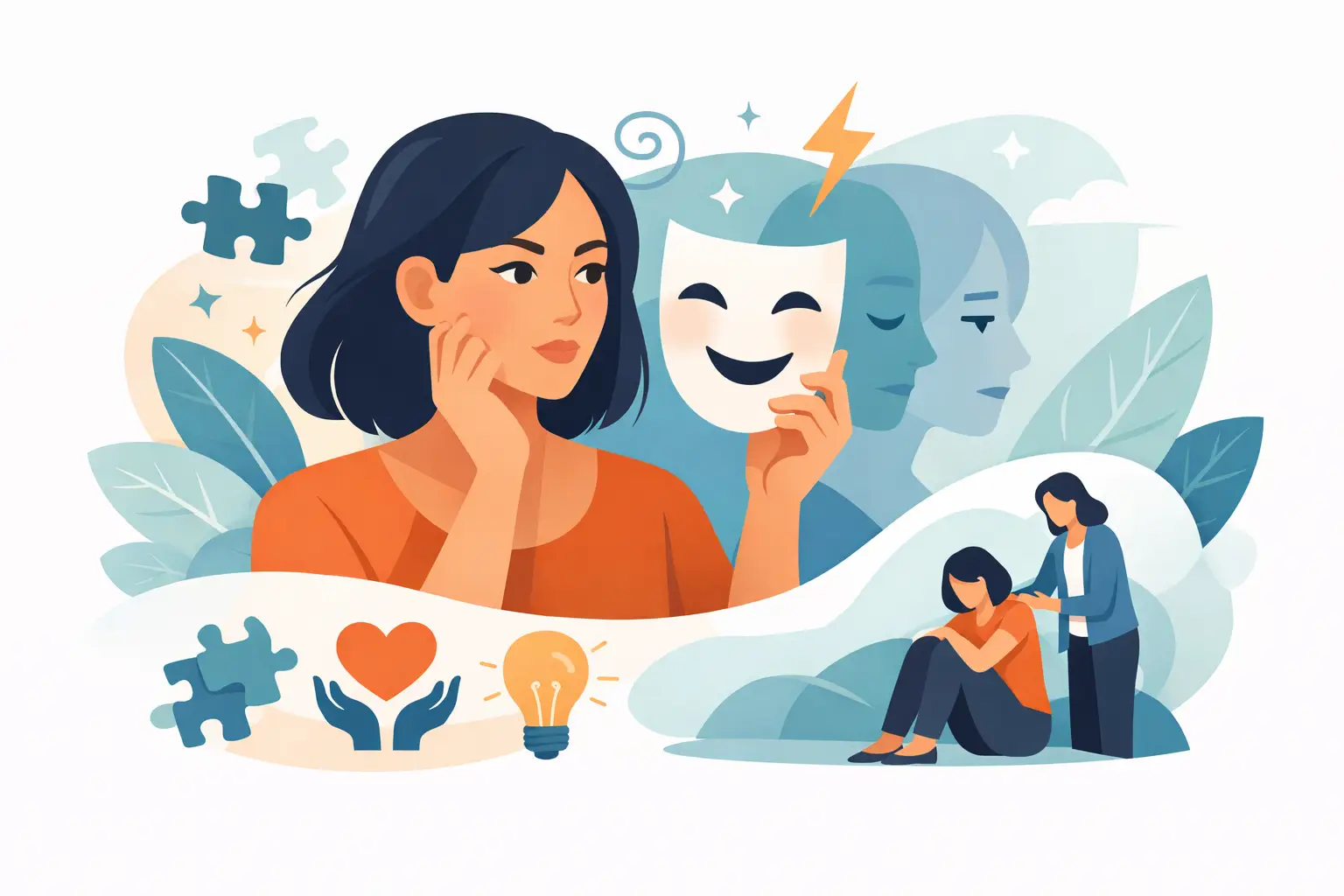
Some women look organised on the outside while feeling like everything is held together with sheer effort. They meet deadlines, remember birthdays, keep up appearances and push through exhaustion, yet privately feel scattered, overwhelmed or constantly behind. That is often where adhd masking in women shows up – not as obvious chaos, but as relentless compensation.
Masking is when someone hides, suppresses or works around their ADHD traits in order to appear more in control, capable or consistent than they actually feel. For many women, this starts early. They learn to be agreeable, try harder, over-prepare and stay quiet about how much things cost them. Over time, that effort can become so normal that they do not realise they have been masking at all.
What ADHD masking in women can look like
Masking does not always look dramatic. In fact, it often looks responsible. A woman may rely on lists for everything, arrive early because she knows she will otherwise be late, rehearse conversations in her head, or stay up far too late catching up on tasks that others assume came naturally.
She might be the person who is described as capable but anxious, smart but inconsistent, high-performing but always exhausted. At work, she may overcompensate by putting in extra hours, triple-checking every detail or avoiding tasks she is worried she will not complete perfectly. At home, masking can look like carrying the mental load through panic, guilt and adrenaline.
For some women, the mask is people-pleasing. For others, it is perfectionism, overachievement, constant apologising or carefully controlled routines. Some become experts at hiding forgetfulness, emotional intensity or time blindness. Others withdraw socially because keeping up the mask is too draining.
Why women are often missed
ADHD has historically been recognised through a narrower lens, often based on more external, disruptive presentations. Many girls and women do not fit that picture. They may be inattentive rather than hyperactive, internalise their struggles, or channel their energy into socially acceptable forms such as talking a lot, overcommitting or being constantly busy.
There is also the pressure of expectation. Women are often expected to manage schedules, relationships, home life, work demands and emotional labour without dropping the ball. When ADHD makes those things harder, many do not ask for help. They assume they are failing at something everyone else finds easy.
That misunderstanding can lead to years of being labelled sensitive, lazy, disorganised, dramatic, careless or simply bad at adult life. Some women are first treated for anxiety or depression, which may well be present, but the underlying ADHD remains unrecognised. By the time they start questioning it, they may already be burnt out.
The cost of masking over time
Masking can help someone get through school, work or family life in the short term. The trade-off is that it often comes at a high personal cost.
The most common cost is exhaustion. When every task requires extra systems, self-monitoring and emotional effort, daily life becomes heavy. A woman who appears functional may be spending enormous energy just to maintain a basic routine. That can lead to cycles of burnout followed by shame, followed by trying even harder.
Masking also affects identity. Many women describe not knowing what is genuinely them and what is compensation. Are they actually organised, or just terrified of forgetting? Are they calm, or carefully controlled? Have they built a life that suits them, or one designed to hide their difficulties?
Relationships can suffer too. When someone masks, others may not understand how much support they need. Partners, friends or colleagues might see competence and assume capacity. That gap between appearance and reality can feel lonely. It can also create resentment when a woman is praised for coping while privately struggling.
Signs the mask may be slipping
Often, women start noticing their ADHD traits more clearly when life becomes more complex. University, career pressure, parenthood, relationship strain, peri-menopause, or managing a household can all increase executive load. Systems that once held things together stop working.
That can look like missed appointments, emotional overwhelm, unfinished tasks, chronic lateness, decision fatigue or feeling unable to start even simple jobs. Some women find they can no longer sustain the same level of performance and feel frightened by the change. In reality, it may not be that things have suddenly got worse. It may be that the mask is no longer sustainable.
This matters because many women only seek support when they are already depleted. By then, they may believe they need to become more disciplined, more motivated or more efficient. Often, what they actually need is a clearer understanding of how their brain works and support that reduces the load rather than adding more pressure.
How to recognise masking without blaming yourself
A helpful place to start is with curiosity. Not every coping strategy is masking, and not every high-achieving woman with ADHD is pretending. The key question is whether the way you are managing life is sustainable, or whether it depends on stress, fear and overcompensation.
You might ask yourself: Do people underestimate how hard ordinary tasks are for me? Do I look more organised than I feel? Am I constantly trying to avoid being found out as forgetful, distracted or inconsistent? Do I crash when I get home because I have spent the day holding it all together?
If the answer is yes, that does not mean you have failed. It means your effort has been carrying more than other people can see. That recognition can be emotional, especially for women who have spent years judging themselves harshly. But it is also often the turning point.
What support can actually help
Support for adhd masking in women needs to go beyond generic advice like use a planner or just build better habits. Most women who mask have already tried very hard. What helps is support that is practical, personalised and free from shame.
First, it helps to reduce the gap between what life demands and what your current systems can realistically support. That may mean simplifying routines, lowering unnecessary standards, creating external structure and identifying the tasks that consistently create friction.
Second, it helps to build strategies around real patterns rather than ideal ones. If mornings are hard, the solution is not a perfect morning routine copied from someone else. It might be preparing fewer decisions the night before, using visual prompts, changing timing expectations or creating accountability that feels supportive instead of punishing.
Third, emotional regulation matters. Many women who mask are not just managing tasks. They are managing the fear of disappointing people, the sting of past criticism and the pressure to keep proving themselves. Practical coaching can be especially useful here because it links insight to action. It helps turn self-awareness into workable routines, boundaries and follow-through.
For some women, assessment is also an important step. A clearer understanding of ADHD can bring relief, validation and better-targeted support. For others, coaching is the first place they feel understood in day-to-day terms. ADHD Coaching Australia supports women with practical, structured coaching that focuses on how life actually works – at home, at work and in relationships.
Moving from masking to self-trust
Unmasking does not mean giving up on structure or stopping all coping strategies. It means building a life that fits you better, with less pretending and less exhaustion. Some strategies will still be useful. The difference is that they come from self-understanding rather than fear.
That shift can take time. You may need to relearn what support feels like, what realistic expectations look like, and where your limits actually are. Some women feel grief when they realise how long they have been pushing through. Others feel relief first. Most feel both.
A good next step is not to fix everything at once. It is to notice where you are working hardest to look fine, and ask what would make that part of life easier, kinder and more sustainable. That is often where real change begins.