
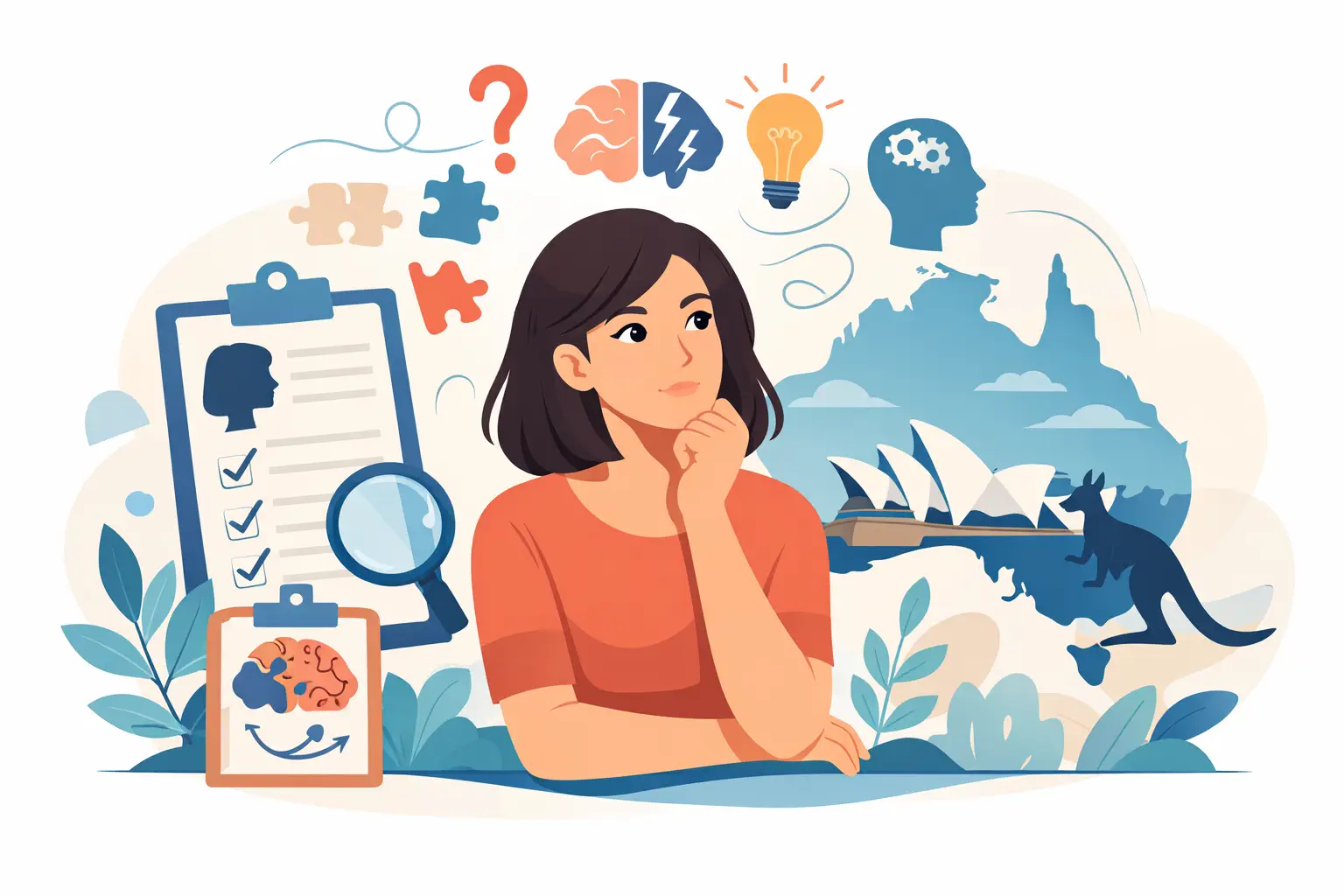
For many women, the question does not start with hyperactivity. It starts with exhaustion. Years of feeling scattered, overcommitted, emotionally flooded, forgetful, or somehow always behind can look like stress, anxiety, burnout, or a personal failing. A women ADHD assessment guide can help make sense of that pattern and turn confusion into a clearer next step.
If you have spent years holding everything together on the outside while feeling chaotic underneath, you are not alone. Many women are identified later in life because their ADHD has been masked by high effort, people-pleasing, perfectionism, or constant overcompensating. Assessment is not about proving you are struggling enough. It is about understanding how your brain works so support can be matched to your real needs.
Why ADHD in women is often missed
ADHD has historically been recognised through a narrower lens, often based on how it shows up in boys. That can leave women overlooked, especially if they are not obviously impulsive or disruptive. Instead, the signs may look quieter from the outside – chronic disorganisation, mental overload, time blindness, emotional intensity, forgetfulness, difficulty starting tasks, or cycling between overperformance and shutdown.
Women also tend to be socially conditioned to mask. They may become the person who writes everything down, overprepares, apologises constantly, or stays up late catching up on what slipped through the cracks. From the outside, they can seem capable. Inside, it can feel like living one missed step away from collapse.
Hormonal changes can complicate things further. Puberty, pregnancy, postpartum shifts, perimenopause, and menopause may all affect attention, mood, memory, and regulation. That does not mean every struggle is ADHD, but it does mean assessment needs context. A good clinician will look at the full picture rather than reducing everything to stress or anxiety.
What a women ADHD assessment guide should actually help with
The point of an assessment guide is not to diagnose you. It is to help you prepare, ask better questions, and understand the process before you step into it. That matters because uncertainty can be one of the biggest barriers. Many women delay seeking help because they worry they will not be believed, will not explain themselves properly, or will be told they are simply overwhelmed.
A useful women ADHD assessment guide should help you recognise common patterns, gather the right information, and know what kind of professional support to look for in Australia. It should also reassure you that mixed feelings are normal. Relief, doubt, grief, validation, and fear often sit side by side during this process.
Common signs women bring to assessment
There is no single ADHD profile, and not every woman will relate to every sign. Still, there are themes that come up often. Some women report feeling mentally busy all the time but unable to translate intention into action. Others describe losing track of time, struggling with follow-through, starting too many things at once, or becoming paralysed by everyday admin.
Emotional regulation can also be part of the picture. That may show up as rejection sensitivity, irritability, rapid overwhelm, shame spirals after small mistakes, or difficulty recovering once stress tips over. Some women have a long history of being labelled lazy, dramatic, careless, too much, or not trying hard enough when the reality is far more complex.
It is also common to have anxiety, depression, trauma, sleep issues, or autistic traits alongside ADHD. That can make the assessment process more nuanced. The goal is not to force everything into one explanation. It is to understand what is contributing to your daily challenges and what support is likely to help.
Who can assess ADHD in Australia
In Australia, ADHD assessment is typically completed by a psychiatrist, paediatrician for younger people, or a psychologist as part of a broader assessment process depending on the purpose and pathway. Rules around diagnosis, prescribing, and referral can vary by state and by practitioner, so it helps to check the current requirements where you live.
Your GP is often the first step. They can discuss your concerns, rule out other contributors, and refer you to an appropriate clinician. Some women go straight to private providers after researching options themselves, but even then, a GP can be useful in coordinating history, mental health care, and any relevant medical information.
The best fit is not always the fastest appointment. A clinician with experience assessing ADHD in women may be more attuned to masking, internalised symptoms, and the overlap with anxiety or burnout. That can make a real difference to how heard and accurately understood you feel.
What to expect during a women ADHD assessment
Most assessments involve more than one conversation. You may be asked about your current symptoms, childhood experiences, school history, work patterns, relationships, sleep, mental health, and daily functioning. Some clinicians use structured questionnaires or rating scales. Others include input from a parent, partner, school reports, or other historical records where available.
That childhood piece matters because ADHD is a neurodevelopmental condition. Even if no one spotted it at the time, the assessor will usually look for signs that some patterns were present earlier in life. For women, those signs may have been missed because they were interpreted as daydreaming, sensitivity, messiness, being chatty, underachieving, or trying but not quite managing.
Assessment is not a test you pass by saying the right thing. In fact, trying to sound organised can sometimes blur the reality. It helps to describe what daily life actually costs you. Are routines hard to maintain without crisis? Do you forget appointments unless everything is alarmed? Are simple tasks taking far more energy than they should? Those details matter.
How to prepare without overwhelming yourself
Preparation can make assessment feel less daunting, but it does not need to become another impossible project. Start by jotting down examples from real life. Think about work, study, parenting, finances, household tasks, friendships, and emotional regulation. Where do things repeatedly break down, even when you care and try?
It can help to notice patterns across time rather than isolated bad weeks. Have you always struggled with lateness, procrastination, clutter, unfinished tasks, or mental overload? Did school reports mention distraction, inconsistency, careless mistakes, talking too much, or not working to potential? If a trusted family member knew you as a child, their observations may also be useful.
You might also write down what you are hoping to understand. Some women want diagnostic clarity. Others want support options, validation, or a framework that makes their history make sense. Being clear about your reason for seeking assessment can help the conversation stay grounded.
Questions worth asking before you book
A little screening up front can save stress later. Ask whether the clinician has experience assessing ADHD in women and adults. Check what the process involves, how many appointments are typical, whether questionnaires are included, what the costs are, and whether a written report is provided.
It is also reasonable to ask about wait times, Medicare rebates where relevant, and what happens after assessment. Some services focus only on diagnosis. Others can discuss treatment planning or refer you onward for practical support. If you already know you will need help with routines, follow-through, emotional regulation, or daily systems, it is worth thinking beyond diagnosis from the start.
What happens after the assessment
A diagnosis can bring relief, but it does not automatically create change. For many women, the next stage is learning how to work with their brain in everyday life. That may include medication, therapy, coaching, workplace or study adjustments, and practical systems for time, planning, energy, and emotional regulation.
This is where shame-free support matters. Understanding you have ADHD can reframe years of self-criticism, but it can also bring grief for how long things were misunderstood. Both responses are valid. Real progress usually comes from combining insight with structure, not from trying harder with the same strategies that have already worn you out.
For women who want practical, non-clinical support after assessment, ADHD Coaching Australia offers structured coaching that focuses on daily functioning, confidence, and sustainable systems. That can be especially helpful when you know what is happening but need support turning that knowledge into routines that actually stick.
If you are wondering whether to take the next step, you do not need to be certain before asking for help. You only need enough honesty to say, this has been harder than it looks, and I want a clearer way forward.