
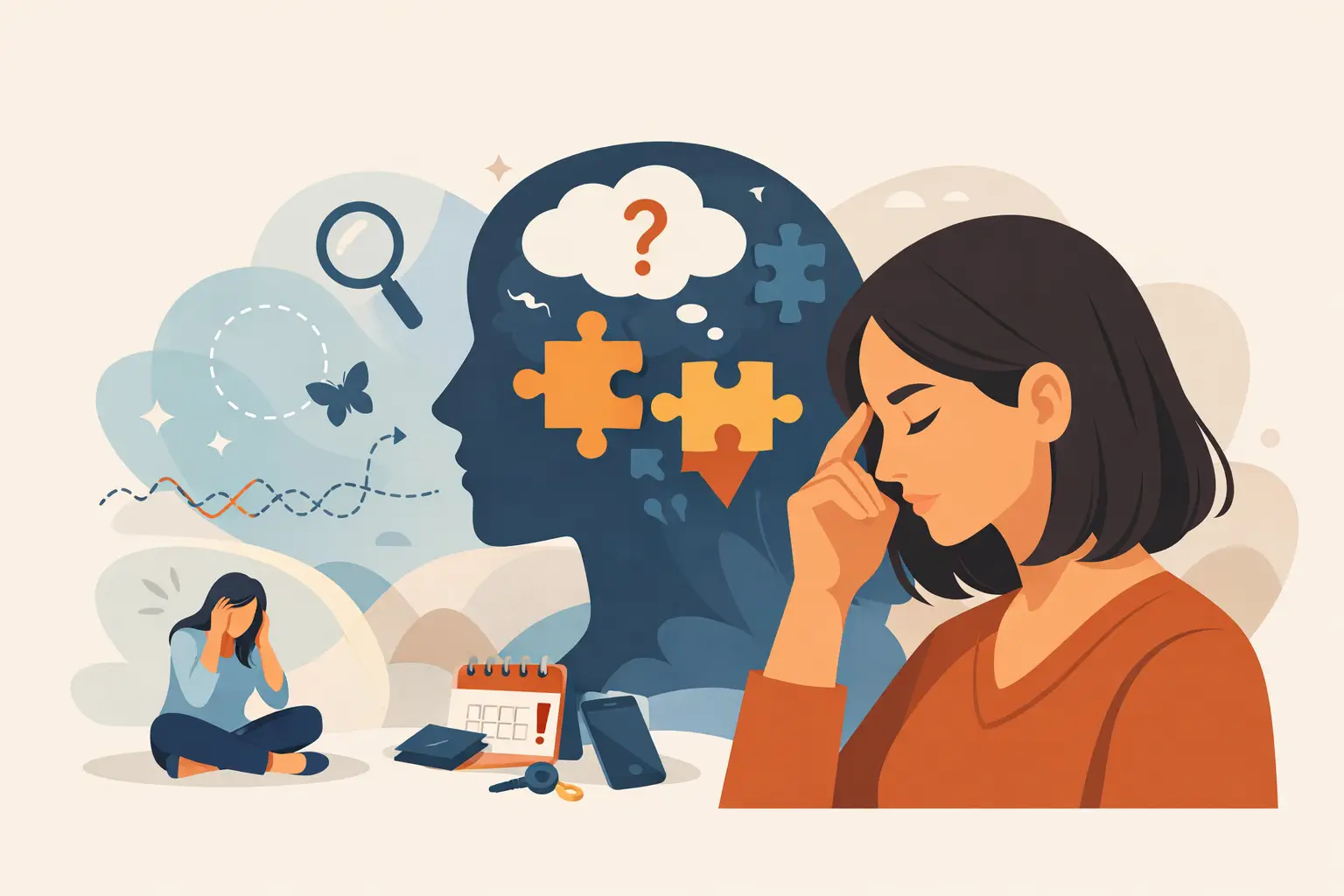
A lot of women first ask about ADHD after a breaking point, not in childhood. It might be the job that suddenly feels impossible to keep on top of, the parenting load that tips into constant overwhelm, or the quiet exhaustion of spending years trying harder than everyone else just to stay afloat. That is often why women miss ADHD diagnosis – not because the signs were never there, but because they were misunderstood, masked or explained away.
For many women, the story is painfully familiar. They were bright but inconsistent at school. They left things until the last minute, lost track of time, forgot important details, or felt emotionally intense in ways that seemed hard to explain. Yet instead of someone asking whether ADHD might be part of the picture, they were labelled lazy, scattered, too sensitive, anxious, dramatic or simply bad at coping.
Why women miss ADHD diagnosis in the first place
For years, ADHD was framed around a narrow stereotype: the disruptive young boy who could not sit still in class. That image shaped what teachers noticed, what parents worried about and what many professionals were trained to look for. Women and girls often present differently. Their ADHD may be less outwardly obvious and more internalised, which means it can slip under the radar for a long time.
Some girls do well academically, especially in the earlier years when routines are externally structured and expectations are simpler. They might be chatty rather than disruptive, dreamy rather than hyperactive, or highly capable in bursts while privately struggling with procrastination, forgetfulness and emotional overload. Because they are not always the student causing concern, they are less likely to be referred for assessment.
There is also the issue of compensation. Many women become exceptionally good at covering their difficulties. They over-prepare, rely on lists for everything, stay up late to finish tasks they could not start earlier, or push themselves into a constant state of stress just to appear organised. From the outside, it can look like they are coping. From the inside, it can feel like running a marathon every day.
The role of masking and overcompensating
Masking is one of the biggest reasons women are missed. It means consciously or unconsciously working to hide struggles, manage other people’s expectations and present as capable, calm and in control. That effort can start very early.
A girl may notice she forgets instructions, loses things, blurts out, zones out or struggles to keep up socially. Rather than being understood, she may be criticised or teased. Over time, she learns to monitor herself closely. She becomes the one who double-checks everything, apologises constantly, people-pleases, or burns huge amounts of energy trying not to disappoint anyone.
The trade-off is that masking can make ADHD harder to spot. If someone is meeting deadlines at the cost of panic, sleep loss and chronic stress, their struggle is still real. It is just hidden behind effort. By adulthood, many women are praised for being high-functioning while privately feeling like they are barely holding things together.
Anxiety, depression and burnout can blur the picture
Another major reason women miss ADHD diagnosis is that they are often identified first with anxiety, depression or stress-related burnout. Sometimes those diagnoses are accurate and co-existing. Sometimes they are describing the result of untreated ADHD rather than the full story.
Think about what years of missed deadlines, forgotten appointments, emotional reactivity, messy systems and inconsistent follow-through can do to self-esteem. When daily life feels harder than it seems to be for everyone else, anxiety often follows. So does shame. A woman may believe she is disorganised, unreliable or simply not trying hard enough, when in fact she has been working around an unrecognised neurodevelopmental difference for years.
This matters because support can miss the mark if ADHD is not considered. Strategies aimed only at reducing anxiety may help to a point, but they will not necessarily solve time blindness, task initiation problems, working memory difficulties or chronic inconsistency. Many women know this feeling well – they have tried to be calmer, more disciplined and more motivated, yet the same patterns keep returning.
Hormones, life stages and rising demands
ADHD symptoms do not happen in a vacuum. Hormonal changes can affect attention, mood, energy and emotional regulation, which may make ADHD more noticeable at certain stages of life. Puberty, pregnancy, early motherhood, perimenopause and menopause can all shift the load.
That is one reason some women are not identified until much later. They may have managed through school or early adulthood using intelligence, structure or sheer effort. Then life becomes more complex. Work responsibilities increase, relationships require more coordination, children add mental load, and the systems that once held everything together stop being enough.
It is not that ADHD suddenly appears. It is that the supports and coping mechanisms no longer cover the strain. A woman who once seemed organised may start missing appointments, losing track of bills, forgetting school emails, struggling with paperwork, or feeling constantly flooded by basic admin. These changes can be frightening, especially when she has spent years being told she just needs to be more consistent.
Social expectations play a part
Women are often expected to carry a heavy invisible workload. They are more likely to be judged on how well they manage the household, remember birthdays, keep track of schedules, regulate emotions, maintain relationships and stay on top of daily details. When ADHD affects those areas, the impact can feel deeply personal.
Instead of recognising executive functioning challenges, families and workplaces may see carelessness or lack of effort. Women themselves may absorb that message. They often become experts in self-blame before ADHD is ever mentioned.
This is one of the more painful parts of the diagnosis gap. Many women are not just unsupported – they are misread. They may know they are capable, yet have no explanation for why routine tasks feel so hard to start, organise or complete. The mismatch between capability and consistency can create a lot of confusion.
Signs that are often overlooked in women
ADHD in women does not always look loud. It may show up as chronic lateness, piles of half-finished tasks, difficulty switching attention, emotional intensity, forgetfulness, restlessness that feels internal, or a constant sense of being behind. Some women describe it as having a brain that never stops but still cannot land on the task in front of them.
Others look very organised on paper but only because they have built elaborate coping systems. They may rely on reminders for everything, avoid tasks until urgency kicks in, or need pressure to activate. They might appear successful while feeling exhausted by how much effort daily functioning takes.
There is no single female ADHD profile. Some women are outwardly hyperactive. Others are primarily inattentive. Many have a mix. What matters is not whether they fit a stereotype, but whether there is a long-standing pattern of attention regulation, impulsivity, executive functioning difficulty and emotional strain that affects everyday life.
What to do if this sounds familiar
If you have been wondering whether ADHD could explain your experience, you do not need to have every answer before seeking support. It can help to start by noticing patterns across time rather than focusing on one bad week. Ask yourself whether these challenges have shown up in school, work, home life, relationships or daily routines, and whether you have spent years compensating in ways that leave you depleted.
Assessment can provide clarity, but support does not have to begin only after a formal diagnosis. Practical coaching can help you understand how your brain works, reduce shame and build systems that fit real life. That might mean finding better ways to manage time, follow through on tasks, regulate emotions, plan your week or recover from overwhelm without relying on constant crisis mode.
For women especially, the right support should feel both validating and useful. You should not have to prove you are struggling enough, nor should you be told to simply try harder. A strengths-based, structured approach can make a real difference because it focuses on what is happening day to day and what will actually help.
At ADHD Coaching Australia, this is often where the shift begins. Not with judgement or labels, but with understanding, practical strategies and the relief of realising your challenges may finally make sense.
If you have spent years feeling capable but chronically overwhelmed, there may be more to the story than stress or poor habits. Sometimes the most helpful next step is simply allowing yourself to ask the question seriously – and giving yourself permission to be understood properly.