
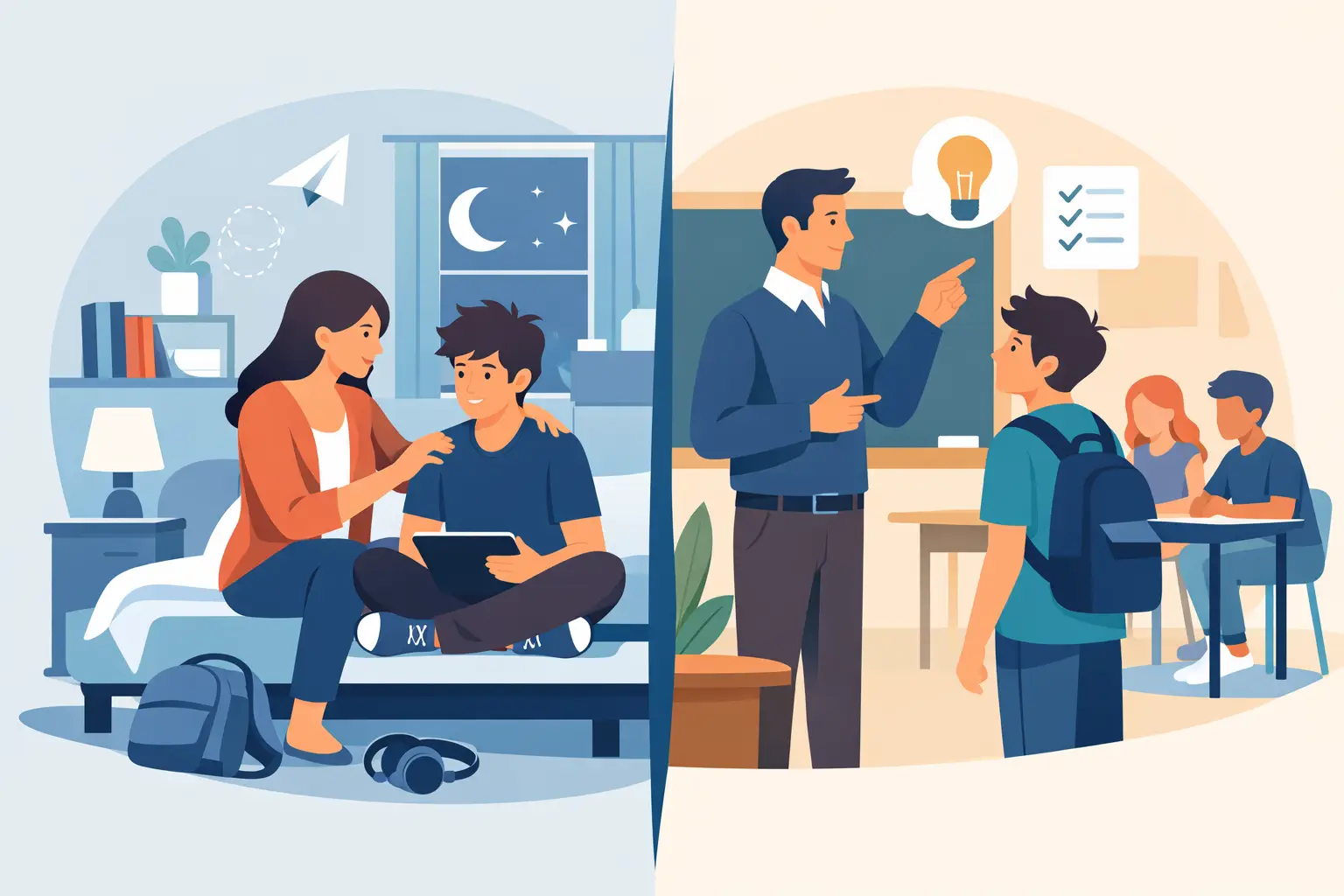
When a teen is missing deadlines, melting down after school, arguing over simple requests or insisting they will do it later, it can look like defiance from the outside. Often, it is overwhelm. If you are trying to work out how to support ADHD teens, the most helpful shift is this one – stop asking, “Why won’t they?” and start asking, “What is getting in the way?”
That question changes everything. It moves the focus away from blame and towards practical support. Teenagers with ADHD are not choosing difficulty for the fun of it. Many are working very hard to keep up with school demands, social pressure, family expectations and the constant feeling that they should be doing better than they are.
What ADHD can look like in the teen years
ADHD in adolescence is rarely just about attention. It can show up as time blindness, emotional intensity, disorganisation, poor follow-through, forgetfulness, impulsive decisions, avoidance and a nervous system that gets overloaded quickly. Some teens seem busy and restless. Others look shut down, scattered or constantly exhausted.
This is also the age when the gap between potential and performance often becomes more obvious. School gets more complex. Teachers expect more independence. Friendships become socially demanding. Parents may pull back support, assuming teens should be managing more on their own. For an ADHD teen, that combination can create a lot of friction.
It is worth remembering that ability and consistency are not the same thing. A teen may understand the work perfectly and still not start it. They may want to be on time and still lose track of the morning. They may care deeply and still forget the thing you reminded them about ten minutes ago.
How to support ADHD teens without adding more shame
Support works best when it is practical, calm and respectful. Shame might create short-term compliance, but it rarely builds skills. In many cases, it makes things worse.
Teens with ADHD often receive constant corrective feedback. They hear that they are lazy, careless, dramatic, rude, immature or not trying hard enough. Even when families are doing their best, repeated conflict can reinforce the idea that the teen is the problem. Once that belief sets in, motivation often drops further because every task feels loaded.
A better approach is to separate the teen from the struggle. The messy room is a problem to solve, not proof they are irresponsible. The missed assignment is a cue that the system is not working, not evidence they do not care. This does not mean lowering expectations to zero. It means building expectations around support, not criticism.
Language matters here. “What would make this easier to start?” usually lands better than “Why haven’t you done it?” So does “Let’s work out a system” instead of “You need to be more organised.” The goal is to keep accountability while reducing the emotional heat.
Build structure that does not rely on memory
One of the most useful things you can do is create external structure. ADHD makes it hard to hold multiple steps in mind, estimate time accurately and transition between tasks. Expecting a teen to simply remember more or try harder is not usually enough.
External supports can be simple. A visual checklist for the morning routine, a whiteboard near the front door, alarms with labels, a school bag reset each evening and a dedicated spot for chargers, keys and sport gear can reduce daily stress. What matters is not whether a system looks impressive. What matters is whether it gets used.
Try to keep systems visible and low effort. If a planner requires colour-coding, ten tabs and perfect handwriting, it may be abandoned within days. If homework instructions live in three different apps, a notebook and a group chat, things will fall through the cracks. The best support is often boringly practical.
It also helps to make starting easier. Instead of “Do your homework”, try “Open the laptop and spend five minutes on the first question.” Lowering the activation barrier can make a big difference. Momentum is often the hard part.
Support emotional regulation, not just behaviour
Many ADHD teens are dealing with fast, intense emotional shifts. They may go from fine to furious in minutes, especially when tired, hungry, embarrassed or under pressure. If you only respond to the visible behaviour, you can miss the overload underneath it.
Emotional regulation improves when teens have room to recover, predictable routines and adults who stay steady. That does not mean accepting hurtful behaviour. It means recognising that a dysregulated teen cannot access problem-solving in the same way a calm teen can.
Timing matters. The middle of a blow-up is rarely the moment for a lecture. If possible, focus first on safety and settling the nervous system. Problem-solving can come later, once everyone is regulated enough to think clearly.
It also helps to normalise emotional support. Some teens need movement after school before they can speak civilly. Others need quiet, food or a complete break from demands for half an hour. These are not indulgences. They are often the conditions that make cooperation possible.
Work with the school, not against it
School is where many ADHD struggles become highly visible, but it is also where support can make a big difference. A teen may need help with planning, task breakdown, assignment tracking, classroom seating, reduced distractions or flexibility around how work is completed.
The most effective school support is specific. “They need more help” is hard to act on. “They are missing assessment milestones because they lose track of multi-step tasks and need checkpoint reminders” gives teachers something concrete.
If your teen is old enough, involve them in these conversations. Ask what is hardest at school and what actually helps. Teenagers are more likely to engage with support they have had a hand in shaping. They are also more likely to reject support that feels imposed or embarrassing.
There is a balance here. Some teens want parents highly involved. Others need a little more ownership. It depends on maturity, stress levels and how much executive functioning support they still need. Independence is a goal, but it is built gradually. Removing scaffolding too early can backfire.
Keep expectations realistic and growth-focused
ADHD support is not about making a teen perform like a perfectly organised adult. It is about helping them function more consistently, recover more quickly and trust themselves more over time.
That means progress may look uneven. A system can work beautifully for two weeks and then stop working when school pressure increases. That is not failure. It is feedback. Teenagers change quickly, and support often needs adjusting with them.
Try to notice gains that are easy to miss. Starting homework with one prompt instead of five matters. Remembering sport gear three days in a row matters. Leaving a conversation before it turns into a fight matters. These are meaningful signs of skill-building, even if the bigger picture is still messy.
Praise is most useful when it is specific and grounded. “I noticed you set your alarm and packed your bag before bed” is more effective than a vague “good job”. It shows the teen what worked and reinforces the process, not just the result.
When outside support can help
Sometimes family strategies are not enough on their own. That does not mean anyone has failed. It usually means the level of stress, skill gaps or conflict has gone beyond what can be solved with reminders and goodwill.
This is where structured, non-clinical support can be valuable. ADHD coaching can help teens build practical systems for schoolwork, routines, planning, emotional regulation and follow-through in a way that feels collaborative rather than corrective. It can also help parents shift from constant policing to more effective support. For many families, that change alone reduces a lot of tension.
At ADHD Coaching Australia, this kind of work is built around real-life function. The aim is not to fix a teen. It is to help them understand how their brain works, strengthen the skills that are under strain and create systems that actually fit daily life.
What teens need most from the adults around them
Teenagers with ADHD do not need perfect parents, perfect teachers or perfect routines. They need adults who can stay curious, notice patterns, reduce shame and keep building support around what is genuinely hard.
They also need room to have strengths. ADHD teens are often creative, funny, intuitive, energetic, deeply caring and capable of intense interest and insight. Support should never be so focused on deficits that these qualities get lost.
The most helpful question to come back to is not whether your teen should be able to do something by now. It is what support will help them do it more consistently, with less stress and more confidence. That is where real progress starts.